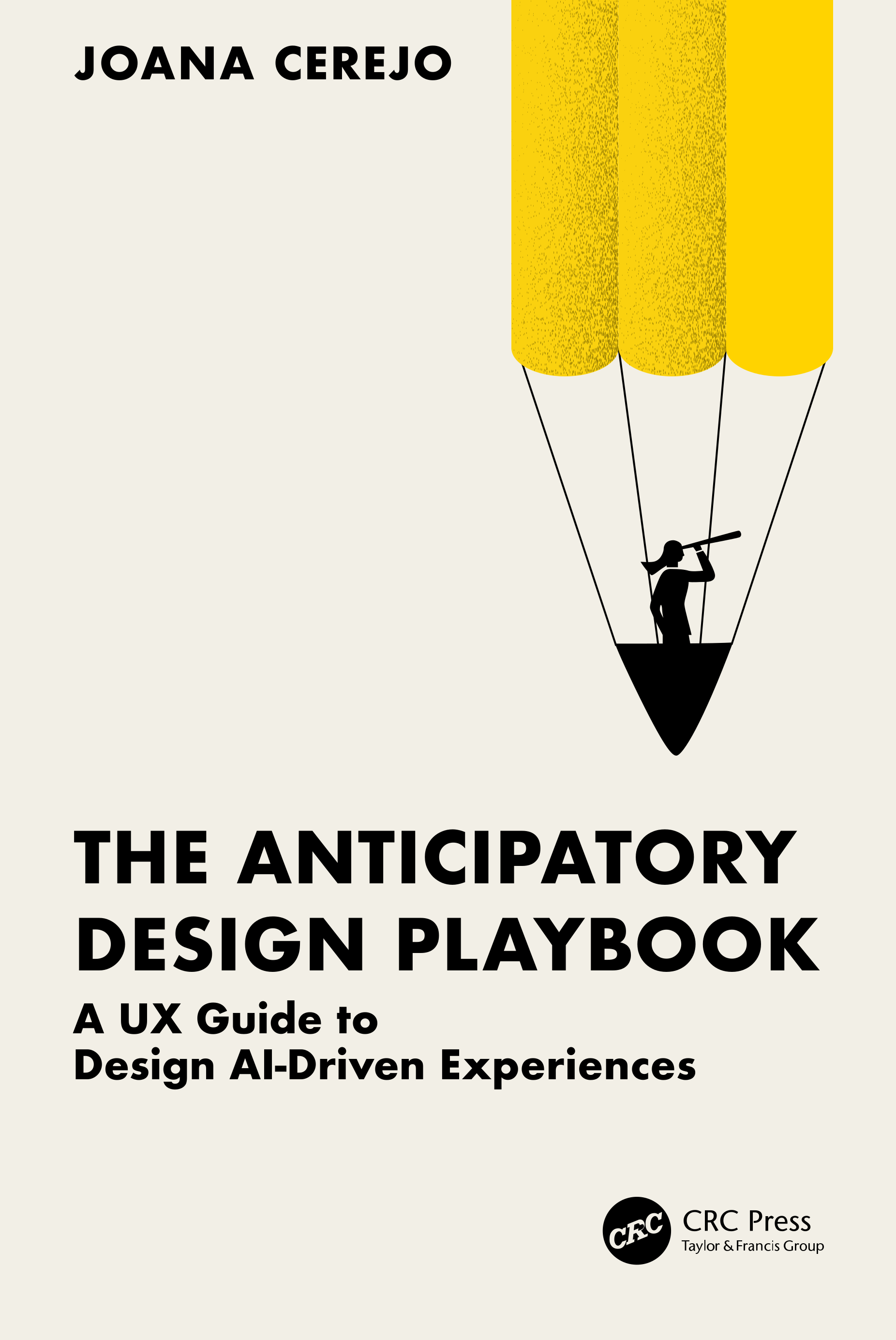
The Anticipatory Design Playbook
Predictive models project from the past into the future. But human behaviour isn’t static. It shifts with context, priorities, and intentions that training data can never capture.
This book bridges foresight and backcasting into AI product architecture, showing teams how to build adaptive systems that honour human intent when statistical patterns fail.
Rooted in doctoral research on anticipatory systems. Applied in complex enterprise AI.
When a system is statistically correct, and still fails the user.
Most AI products are built on behavioural extrapolation: taking past data, running it through a probability model, and predicting what the user wants next.
This works up to a point, until it doesn’t.
High-confidence predictions inevitably break down when a person shifts in ways historical data cannot capture. Training data records what happened before, but it says nothing about:
- A sudden shift in user motivation or stress level.
- Unspoken context or environmental constraints.
- Evolving intentions that never made it into the log files.
The issue isn’t that forecasting is wrong. It’s that forecasting alone is incomplete.
Foresight and backcasting: the guardrails to prediction.
Uncover hidden system assumptions
The gap · Every predictive model carries implicit assumptions about user goals based on past patterns.
The method · Systematically audit your AI product for the blind spots where high statistical confidence masks human friction.
Apply foresight over extrapolation
The gap · Machine learning assumes tomorrow will look like yesterday.
The method · Use foresight as a practical complement to predictive modelling, mapping dynamic user states (motivation, ability, readiness) so the system adapts in real time when behaviour shifts.
Backcasting for human intent
The gap · Designing strictly for “next-token” or “next-action” predictions leads to reactive, brittle experiences.
The method · Work backward from desired human outcomes to architect system behaviours, confidence thresholds, and manageable controls that honour human agency.
When an AI system relies on past data, it assumes human behaviour is static. When context shifts, the model forces past habits, resulting in a statistically correct failure.
Inside the playbook.
Three phases, eleven frameworks. Hover a shape to see its chunks. Click to open the phase.
For anyone shaping intelligent systems.
Unlike most resources focused solely on the technical side of AI, this book bridges design, behavioural science, and machine learning to equip designers, product leaders, and technologists with the tools to shape intelligent systems, before those systems negatively shape us.
Product designers
Design proactive AI with confidence. Read the patterns behind predictive, conversational, and agentic systems, shape the mental models users form, and keep automation and human control in balance.
UX researchers
Make your research shape AI before it ships. Foresight and behavioural-science methods, plus concrete ways to measure trust, transparency, and user agency in human-centred systems.
Product leaders & technologists
Align your team and de-risk the roadmap. A shared language for how proactive, and how autonomous, your AI should be, so product, design, and engineering pull the same way.
Four parts, from the foundations to the finished experience.
PartISetting the stage: machine learning foundations for designers
Introduces designers to AI, data science, and machine learning, not from a technical angle, but from a design perspective. It demystifies how intelligent systems work, clears up common misconceptions, and builds the vocabulary and mental models you need to engage meaningfully in AI-driven projects.
PartIIFrom prediction to anticipation
Explores what makes anticipatory systems different from reactive or merely personalised ones. It draws on behavioural science, temporal reasoning, and foresight techniques, laying the conceptual foundation for designing systems that do more than predict what’s next.
PartIIIDesigning anticipatory systems
Presents practical frameworks (including the Intent–Workflows–Algorithms model) to guide the development of intelligent, user-centred systems. It focuses on turning complexity into clarity and aligning automation with user autonomy.
PartIVDesigning the experience
Introduces a three-phase design process (Anticipate, Imagine, Shape) for building adaptive, anticipatory services. It brings tools, patterns, and methods to help designers work across disciplines and create AI that is not only smart but ethical, transparent, and responsive to human needs.
Available in paperback, hardcover, and eBook.




Have a copy of my book?
Submit your order details to unlock three full months of Pro access to the entire app.